Why patients trust Dr. Cömert with this operation
- Trained in the deep plane technique on Dr. Bryan Mendelson's course at the Mayo Clinic (2023), returning as FaceAcademy 360 guest faculty in 2026
- Fellow of the European Board of Plastic, Reconstructive and Aesthetic Surgery (EBOPRAS, 2024)
- 2,400+ operations performed since 2009, for patients from 48 countries
- Holder of the Turkish Ministry of Health International Health Tourism Authorization
What is a deep plane facelift?
A deep plane facelift lifts and repositions the face at the level beneath the SMAS, the structural layer of muscle and connective tissue, rather than tightening the skin alone. Because the lift happens where aging actually occurs, the result looks rested and natural rather than pulled, and it lasts significantly longer than skin-only techniques.
Dr. Cömert performs the extended deep plane technique, releasing the key retaining ligaments of the midface, jawline and neck so the tissues move as one unit. The neck is addressed in the same operation (deep neck lift) when needed, defining the jawline is usually the single biggest change patients notice.
How the deep plane compares with other lifting techniques
"Facelift" covers a family of operations that differ in how deeply they work and how much of the face they address. Dr. Cömert performs the full range and matches the technique to your anatomy and your goals: an extended deep plane lift is the most comprehensive option, but it is not automatically the right one for every face.
- Extended deep plane face and neck lift: repositions the deeper muscular layer rather than tightening skin, treating cheeks, jowls and neck together. Suits moderate-to-advanced ageing and gives the longest-lasting, most natural result.
- SMAS plication: the supportive layer beneath the skin is folded and stitched to tighten sagging tissue without removing it. Firm, reliable lifting with a relatively gentle recovery; often chosen for mild-to-moderate laxity.
- Mini facelift: a lighter operation through shorter incisions around the ear, aimed at early sagging in the lower face and jowls. Reduced swelling and downtime; suits younger patients or mild laxity.
- Lower facelift: focused on the lower third of the face: jowls, jawline and upper neck. Ideal when the lower face is the main concern rather than the eyes or brow.
- Neck lift: tightens loose skin and lax muscle bands in the neck, contours fat and redefines the jawline. Most often part of a deep plane plan rather than a stand-alone operation.
- Endoscopic lift: minimally invasive, guided by a small camera through a few short incisions, used mainly for the brow and mid-face. Very little scarring and a faster recovery for early brow and cheek descent.
- Revision facelift: a corrective operation after a previous lift, working with existing scars and altered anatomy to restore a natural, balanced result.
Which of these applies to you is decided at assessment, not in advance. If a lighter technique will give you the result you are asking for, Dr. Cömert will tell you so.
Who is it for?
Typical candidates are healthy adults, most often in their 40s to 70s: who are bothered by sagging in the midface and jowls, deepening nasolabial folds, or loss of definition in the neck and jawline. Smokers are asked to stop before and after surgery, and your full medical history is reviewed during the assessment.
If your concerns are mainly around the eyes or brow, this is often combined with eyelid surgery or a brow lift in a single session, a full-face plan is discussed during your assessment.
Dr. Cömert's approach
Every face is planned as a whole. Dr. Cömert combines deep plane face and neck lifting with complementary procedures, eyelid, brow, lip lift, fat grafting: where they serve the overall harmony, and with skeletal support (custom implants or jaw surgery) when the underlying bone structure is the real cause of early sagging. Incisions are placed within the hairline and the natural folds around the ear.
Scars and where the incisions sit
Incisions follow the hairline and the natural folds in front of and behind the ear, so the healed lines sit in shadow or within hair-bearing skin rather than across the open surface of the face. Placement is planned around your own hairline and ear anatomy.
Fresh scars are pink and slightly firm for the first weeks. They soften and fade over 6–12 months as they mature, the same period over which the lift itself settles into its final shape. Consistent sun protection during that time makes a visible difference to how the final lines look.
Recovery, step by step
- Days 1–3: hospital night, then rest with head elevated; swelling and tightness peak.
- Week 1: sutures begin to come out; most bruising settles. A soft-food diet keeps tension off the healing tissues.
- Week 2: most patients are comfortable in social settings, often with light makeup.
- Weeks 3–6: return to exercise gradually; residual swelling continues to fade.
- 6–12 months: scars mature and the final, settled result emerges.
International patients typically stay in Istanbul 7–10 days before flying home; follow-up continues remotely with photos and video calls.
Before and after: deep plane facelift results
Three of Dr. Cömert's deep plane facelift patients, photographed before surgery and at their follow-up. Every photograph is of a real patient and every album is available in full.
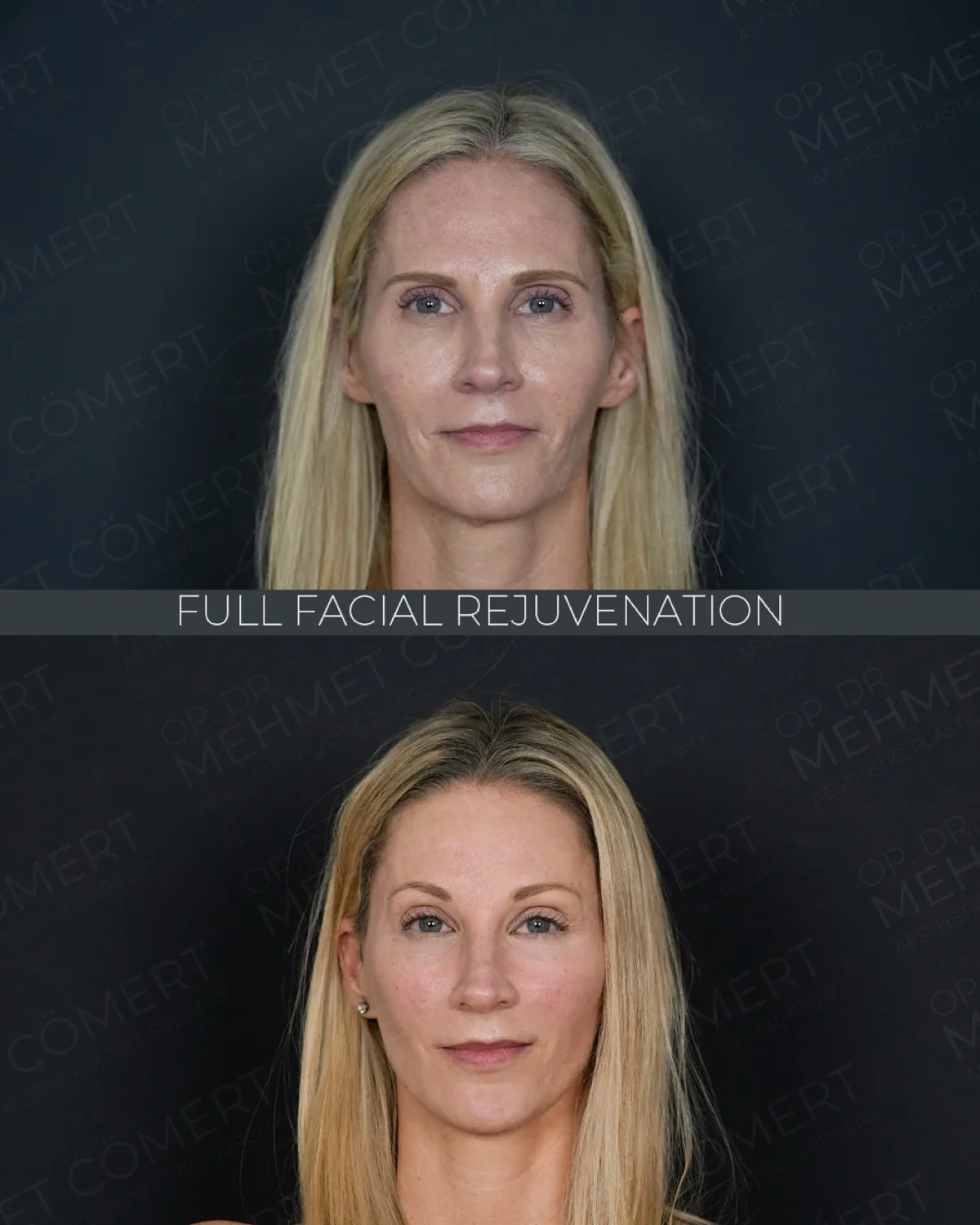
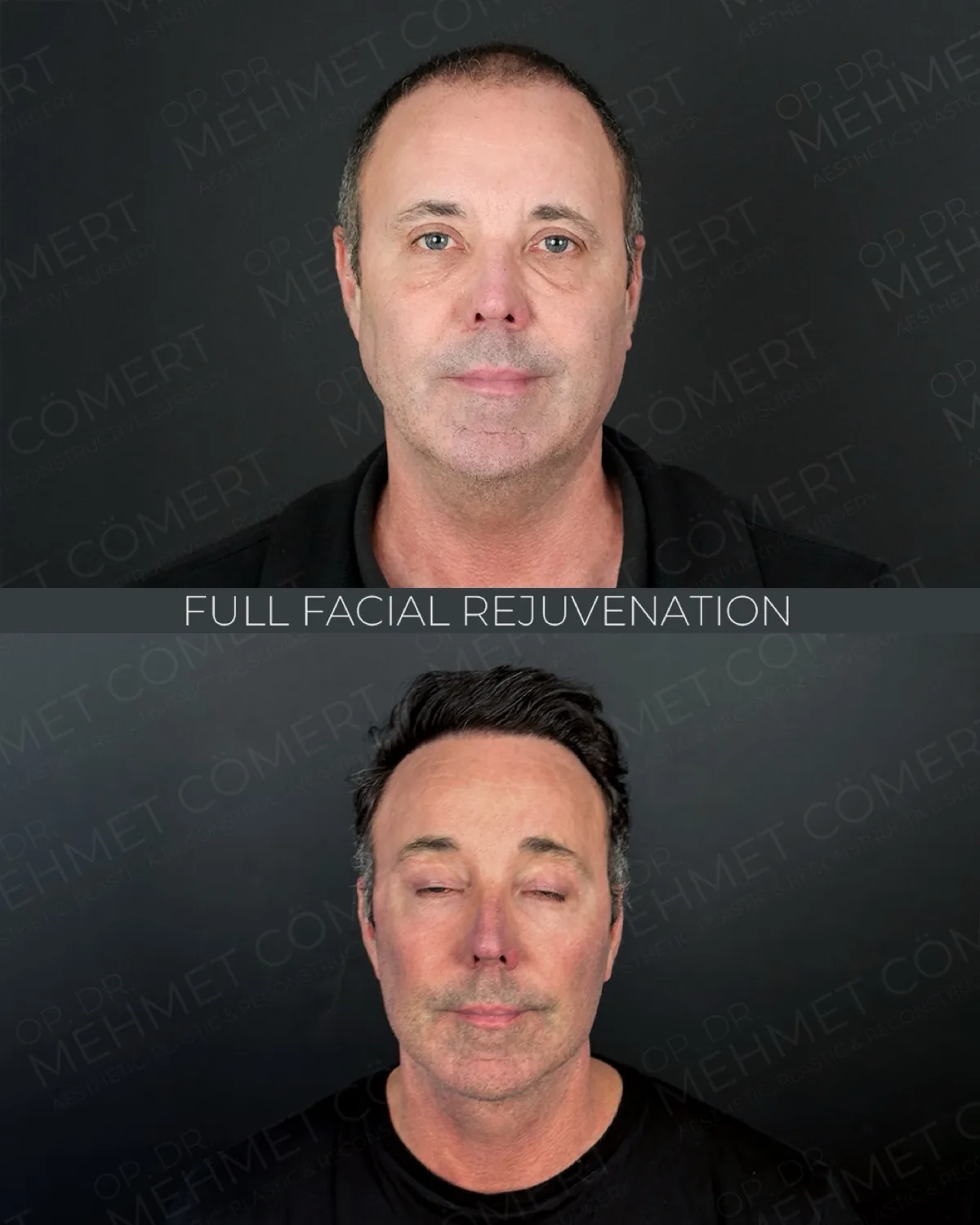
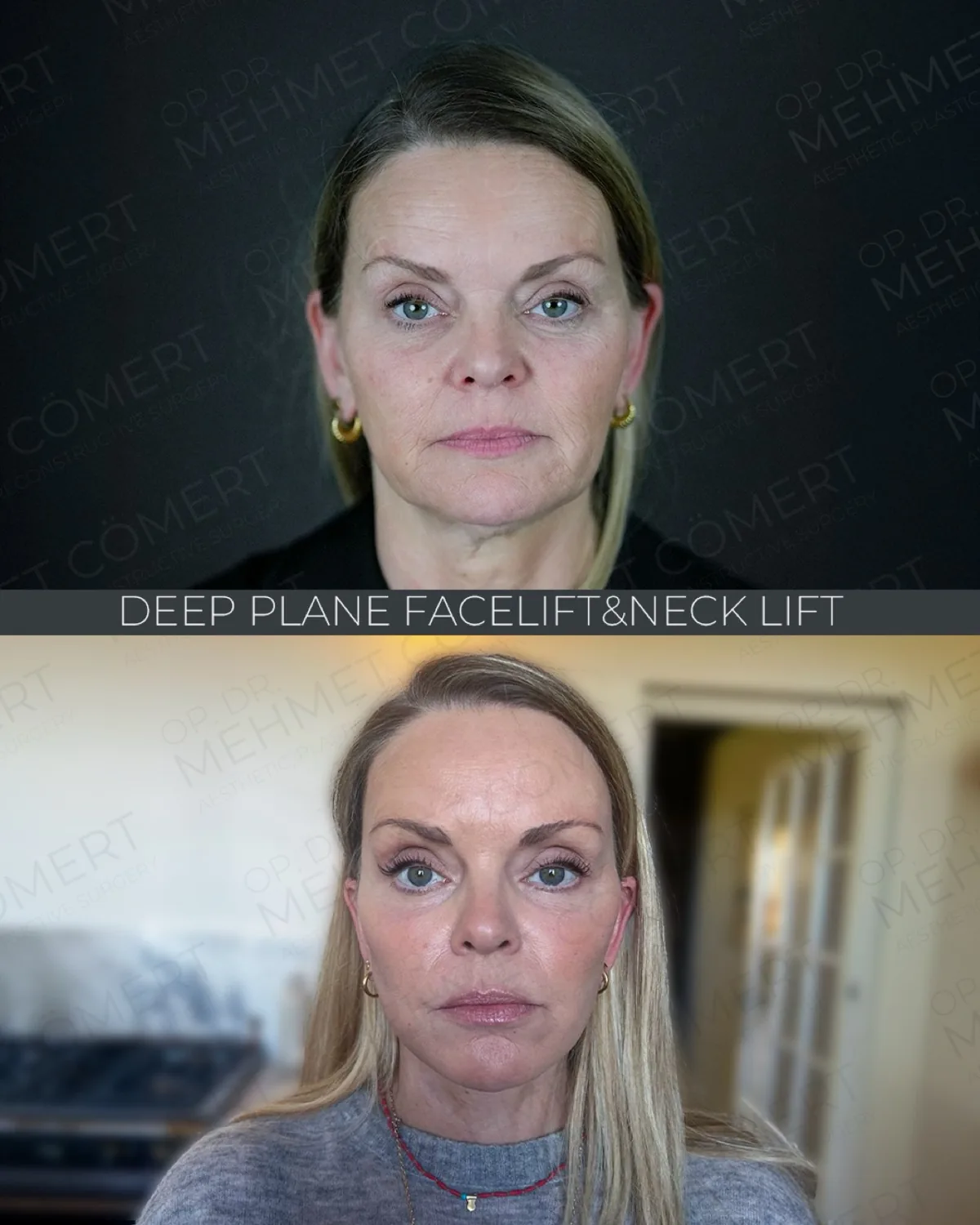
Individual cases shown to illustrate what the operation changes, not as a promise of any particular outcome. Suitability, technique and recovery vary by individual.
See every photograph from these albums →
Why patients travel to Istanbul, Turkey for this surgery
Dr. Cömert's practice is built for international patients: people from 48 countries have travelled to Istanbul for his surgery. The operation is performed at a partner hospital in Beşiktaş with a full anaesthesia team, and a two-night hospital stay is included in the plan rather than treated as an extra. Before you book anything, you send photographs and your history through the online assessment; Dr. Cömert reviews every case personally and you receive an answer within 1 to 3 days, so you know whether you are a candidate before buying a flight.
Once you are in Istanbul, a patient coordinator manages appointments, hospital admission and transfers. After you fly home, follow-up continues remotely with Dr. Cömert's team for as long as you need it. Turkey is one of the world's largest medical travel destinations, and the clinic holds the Turkish Ministry of Health authorization for international health tourism; what sets practices apart is who operates and how follow-up works, which is why this page names the surgeon, the training and the hospital rather than a package.
Planning your treatment in Istanbul
Planning starts remotely. You send photographs and your medical history through the guided online assessment; Dr. Cömert reviews the case personally and replies with his recommendations within 1–3 days, followed by a tailored quote, so both the plan and the cost are settled before you book a flight.
Surgery is performed at a partner hospital in Beşiktaş, Istanbul, with a full anaesthesia team, followed by a two-night inpatient stay. Our international patient coordinator arranges your arrival, accommodation and clinic transfers. Most patients stay in Istanbul 7–10 days so that the first follow-up checks happen before they fly, and follow-up then continues remotely with photos and video calls for as long as needed.